API-Driven Certificate Issuer with Terraform, AWS, and Go
Terraform and Go project that provisions an IAM-protected AWS API for issuing short-lived X.509 certificates.
- Terraform
- AWS
- Go
- PKI
- IAM
- Lambda
This project provisions an IAM-protected certificate issuance API on AWS. It uses Terraform for infrastructure, API Gateway for the public entry point, a Go Lambda for signing, and Secrets Manager for CA material.
The goal was to show a small but realistic PKI workflow: clients generate keys locally, submit a CSR, and receive a short-lived X.509 certificate. The scope is narrow, but it covers infrastructure, backend code, and security decisions in one system.
- Terraform-managed infrastructure
- IAM-protected API instead of an anonymous endpoint
- Go Lambda that validates CSRs and signs certificates
- Clear trade-offs called out for production hardening

Problem
Manual certificate issuance is slow and certificates often live too long. That increases operational overhead and expands the impact of key compromise.
This project models a simpler flow:
- The client generates its own private key.
- The client creates a CSR with the requested identity.
- The client sends the CSR to an API.
- The API authenticates the caller with AWS IAM.
- The signer returns a short-lived certificate.
Architecture Overview
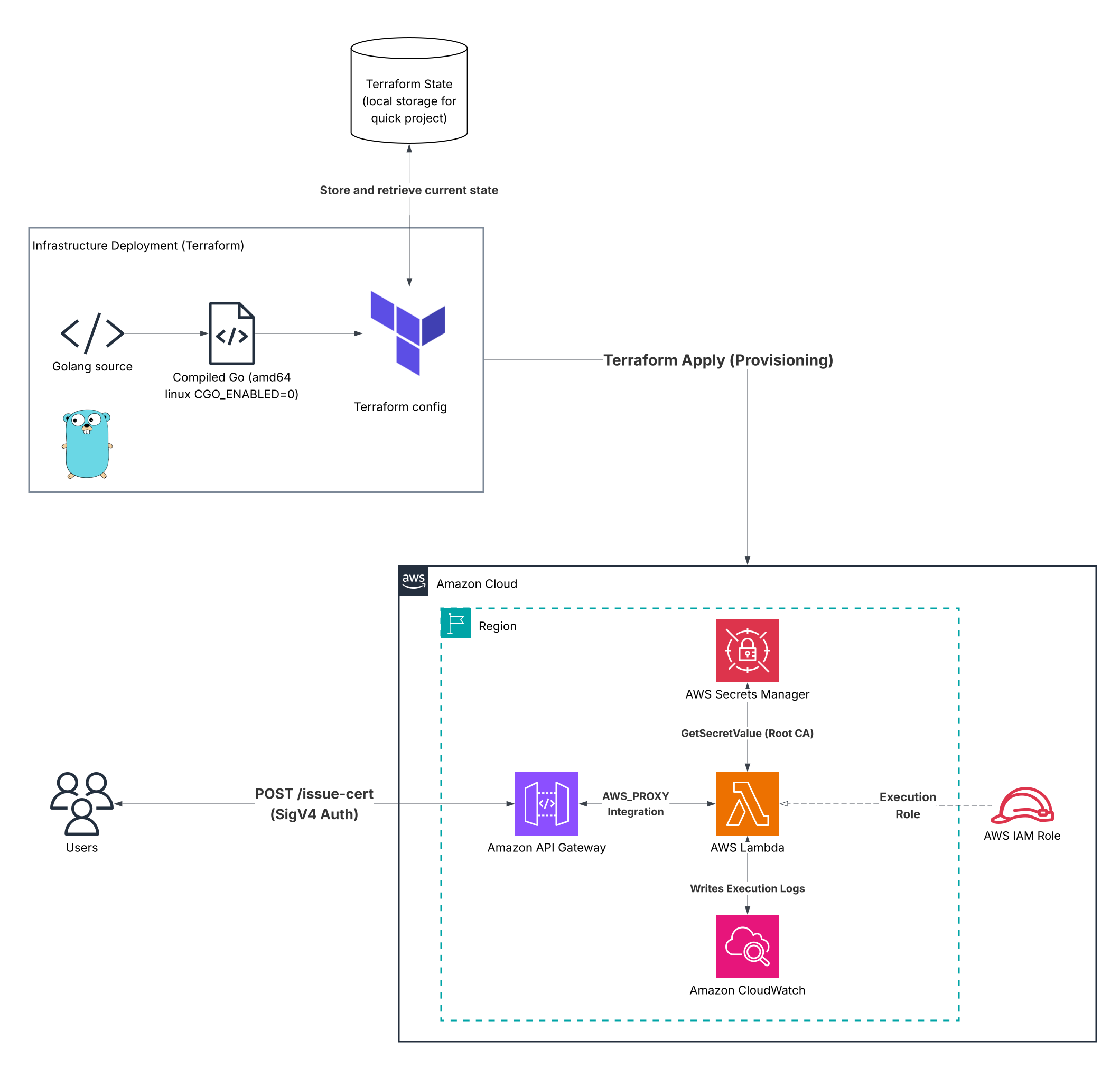
- Terraform provisions the infrastructure.
- Secrets Manager stores the demo CA certificate and private key.
- A Go Lambda fetches the CA material and signs CSRs.
- API Gateway exposes
POST /issue-cert. - API Gateway uses
AWS_IAM, so requests must be SigV4-signed. - A local Python test script generates a keypair, submits a CSR, and verifies the returned certificate.
Certificate Flow
- A demo root CA is generated locally.
- Terraform uploads the CA material to Secrets Manager.
- Lambda is allowed to read only that secret.
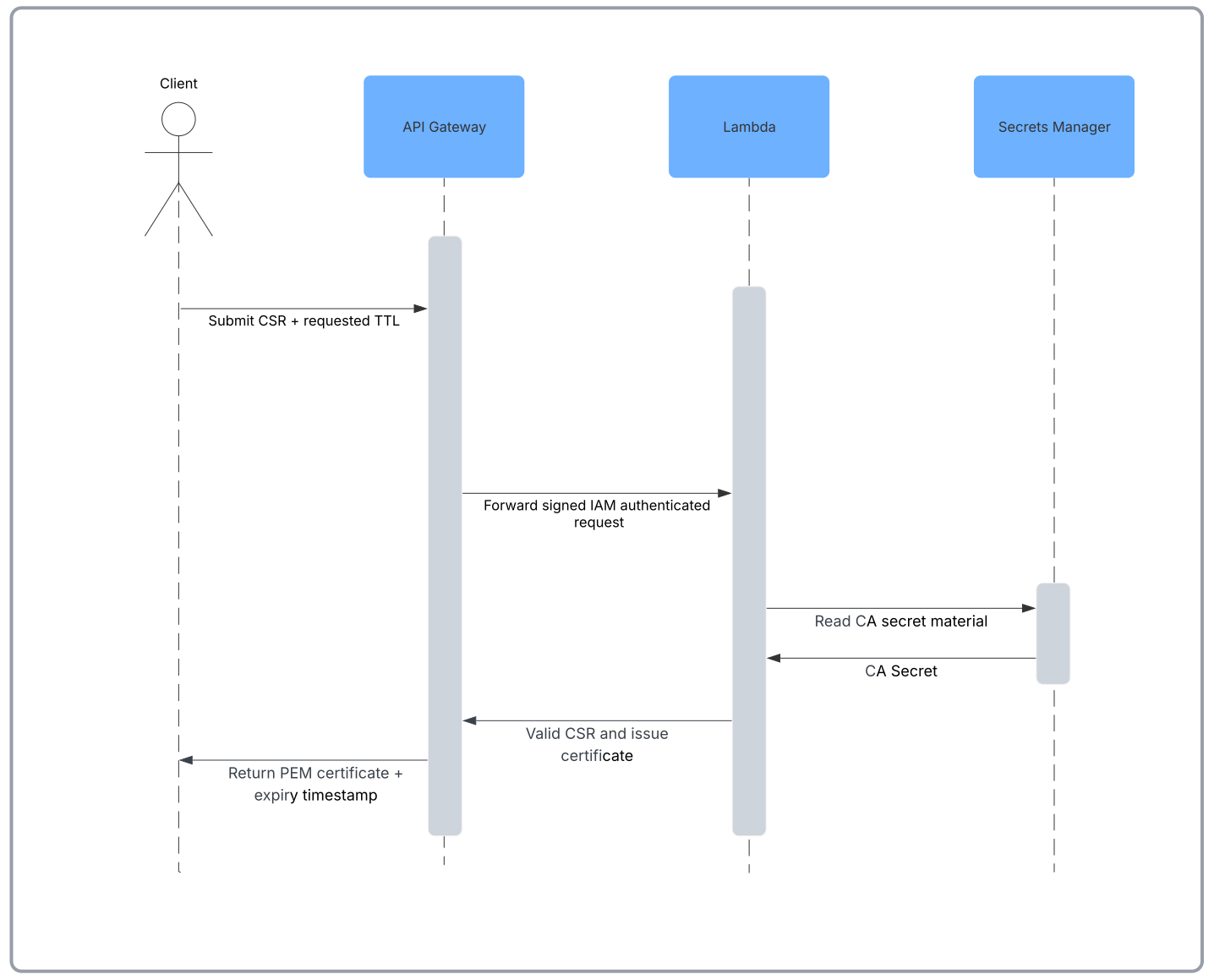
- A client generates a private key and CSR.
- The client sends the CSR as JSON to the API.
- API Gateway authenticates the request with AWS IAM.
- Lambda validates the CSR and issues a short-lived certificate.
- The API returns the PEM certificate and expiry timestamp.
Request shape:
{
  "csr": "-----BEGIN CERTIFICATE REQUEST-----\n...\n-----END CERTIFICATE REQUEST-----",
  "ttl_hours": 12
}
Response shape:
{
  "certificate": "-----BEGIN CERTIFICATE-----\n...\n-----END CERTIFICATE-----",
  "not_after": "2026-05-08T05:39:10Z"
}
Terraform
The Terraform stack provisions:
- A Secrets Manager secret for the CA material
- An IAM role and inline policy for Lambda
- A CloudWatch log group
- A Lambda function using the
provided.al2runtime - An HTTP API in API Gateway
- An IAM-protected
POST /issue-certroute - Lambda invoke permission for API Gateway
Terraform also builds the Lambda binary locally before packaging it. That keeps the demo self-contained, even though a real deployment would move this step into CI.
resource "terraform_data" "build_lambda" {
  triggers_replace = {
    source_hash = local.lambda_source_hash
  }

  provisioner "local-exec" {
    working_dir = local.lambda_source_dir
    command     = "mkdir -p ${local.lambda_build_dir} && GOOS=linux GOARCH=amd64 CGO_ENABLED=0 go build -tags lambda.norpc -o ${local.lambda_build_dir}/bootstrap ."
  }
}
Go Lambda Signer
The Lambda handles the PKI logic:
- Parse the API Gateway event
- Read the CA secret from Secrets Manager
- Decode the certificate and private key
- Parse and verify the PEM CSR
- Create a short-lived certificate
- Return the PEM certificate in the response
Go was a good fit because the standard library already covers the crypto and X.509 work cleanly.
One implementation detail worth calling out: the CA key was in PKCS#8 format, so the signer had to handle that instead of assuming PKCS#1.
Security Decisions
The endpoint is not public. API Gateway uses AWS_IAM, so callers must sign requests with SigV4. That fits internal AWS workloads well because it reuses IAM identities, policies, and audit trails.
The Lambda role is also narrow. It can:
- Write logs to its own CloudWatch log group
- Read exactly one Secrets Manager secret
It cannot enumerate unrelated secrets or access other AWS resources.
Trade-Offs and Production Changes
This is a demo system, not a production CA.
The main shortcut is storing CA material in Secrets Manager instead of using a managed or externally backed CA. That kept cost and setup low, but it is not the production design I would recommend.
For production I would change the following:
- Use ACM Private CA or Vault-backed signing
- Move Lambda build and packaging into CI
- Encrypt and tightly control Terraform state
- Add revocation strategy, certificate inventory, and stronger audit reporting
- Add automated integration tests around the issuance path
- Use a subordinate CA rather than exposing a root CA to the signer
- Change to provided.al2023 runtime, as that has a later deprecation date.
What I Learned
- About mTLS and certificate issuing, the problems in distributed computing it aims to address, and the challenges it introduces (especially within a cloud environment).
- Deeper details and tradeoffs in the following areas:
- Terraform (and backend state management methods)
- AWS IAM
- Golang API development